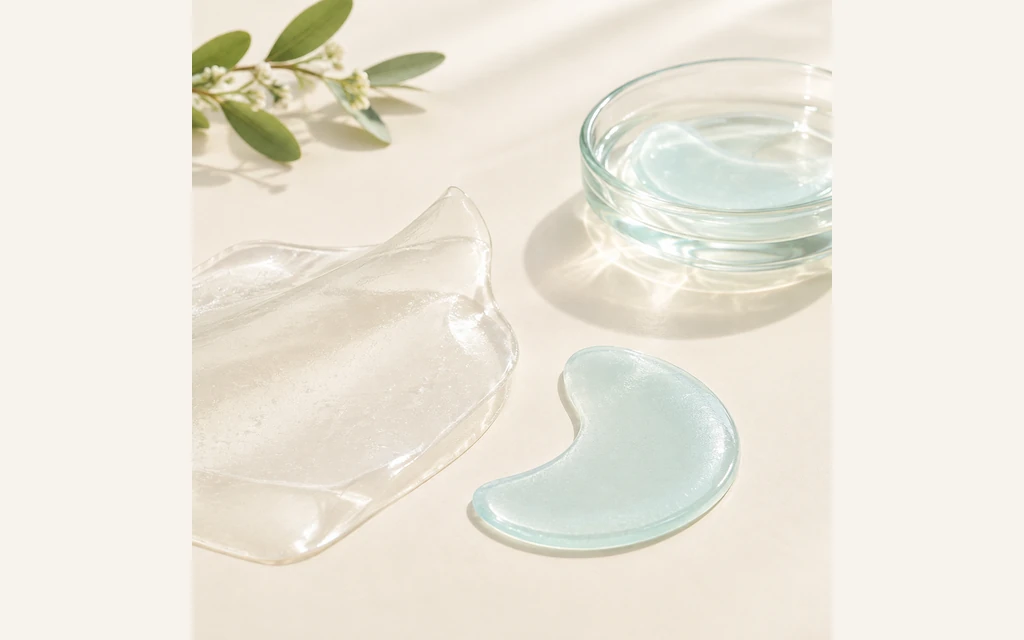
Choose a material direction by the intended use, formula, handling and pack. Appearance alone does not establish how the finished patch will perform.
Begin with the product job
Specify the application area and proposed routine first. An under-eye pair, a full-face mask and a neck patch each require a different discussion of placement and handling. Give the supplier a reference for the coverage you want and identify what your team will compare during sampling. A clear use case is more actionable than a request for the best gel.
Keep the material and formula discussion together
Ask the development team to describe the proposed material route and the formula constraints it introduces. Record ingredient preferences and exclusions as requirements to review, rather than assuming they are already compatible. If an ingredient name is central to your marketing concept, separate the desired inclusion from the finished-product claim and its evaluation.
Review the whole configuration
Assess samples in the intended package wherever possible. Ask what changes when the geometry, support liner, pack count or formula is revised. A material sample shown on an open tray is useful for early discussion, but it is not the same approval object as a packaged consumer product.
Turn preferences into sample observations
Use a review sheet for appearance, removal from the pack, placement, comfort and the experience after removal. Agree the intended instructions and conditions before collecting feedback. A preference such as a lighter feel should be explained with a reference or an observation; it should not become an unsupported performance claim.
Put the decision into your brief
| Decision | Information to confirm |
|---|---|
| Application | Eye, face or targeted area and proposed routine |
| Formula brief | Care direction, preferences and exclusions |
| Physical brief | Coverage, appearance and handling reference |
| Package | Single-use or multi-unit selling format |
Send the application area, a reference image, formula preferences and packaging direction. Request a named sample route and a list of open feasibility questions.
Keep proposed options separate from approved specifications. Ask PZIK to identify the next decision and the information needed to resolve it. Quantity, timing, pricing and final claims are confirmed for the agreed product and packaging scope.
Continue your project review
Explore hydrogel product routes, review shape and packaging customization, or compare the OEM/ODM project stages. When the initial direction is clear, send a project brief with your market, selling unit and quantity.