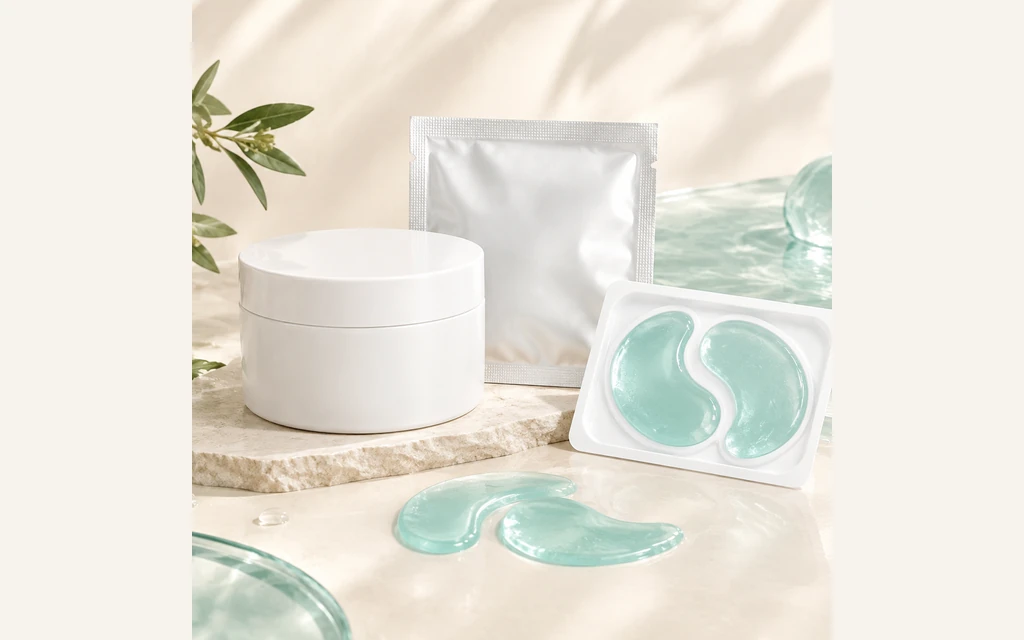
Choose the selling unit from the intended routine and channel, then review the patch and package as one finished configuration.
Start with how the customer will use it
An individual pair, a multi-use jar and a discovery set create different handling and merchandising questions. Describe where the product will be used and how it will be presented for sale. Pack count should follow that role rather than being selected only because a competitor uses the same number.
Define the quantity unit
State whether you are requesting a price per piece, pair, sachet, jar or retail box. Document the number of patches and components inside that unit. This is essential for a useful quotation comparison: a low price per patch is not directly comparable with a complete labeled retail pack.
Review every component
List the primary container or sachet, tray or liner, closure, label, carton and any insert. Ask what is included in the sample and quotation. Where artwork is involved, agree who prepares, checks and approves the files and which version will be used for the final order.
Evaluate the proposed finished pack
Use the actual formula and intended packaging configuration when planning relevant storage, handling and transport reviews. Agree the review conditions, responsibilities and acceptance criteria with the project team. Do not assume a package is suitable only because its appearance matches the brand concept.
Put the decision into your brief
| Decision | Information to confirm |
|---|---|
| Jar | Pack count, closure, product access and proposed storage instructions |
| Single sachet | Piece or pair count, tray or liner, opening and labeling space |
| Retail set | Component list, inner arrangement and outer presentation |
| Quotation | Complete selling unit and included packing work |
Send the intended channel, selling unit, pack count, artwork status and any packaging reference. Ask for the complete pack specification in the quote.
Keep proposed options separate from approved specifications. Ask PZIK to identify the next decision and the information needed to resolve it. Quantity, timing, pricing and final claims are confirmed for the agreed product and packaging scope.
Continue your project review
Explore hydrogel product routes, review shape and packaging customization, or compare the OEM/ODM project stages. When the initial direction is clear, send a project brief with your market, selling unit and quantity.